Library Technology Conference 2010

My colleague (& partner in crime) and I are currently putting the final touches on the workshop we’ve been preparing for the Library Technology Conference at Macalester College in St. Paul, MN, in little over a week.  We’re giving a 90 minute hands-on workshop called “Second Life and Twitter for Librarians: Virtual Tools for Building Local and Global Networks.” Angela will be speaking about Second Life,and I will be speaking about Twitter.

I’m excited, but also pretty nervous!

I’m really looking forward to visiting Macalester, which is where I earned my undergraduate degree.  Sad, though, that my most favorite professors have all already retired or moved on to other Universities.  It really wasn’t that long ago, guys!

Anyway, I will surely be posting more about the conference before, during and after the fact.  Next Wednesday March 10, SLIS is hosting a dry-run of our workshop at noon in the U of I Main Library Computer Lab 3092, with cookies!


(click here to see more links for LibTech 2010)

Content Providers, Content Creators

banksy

Update: 11/15/2010 — I thought this post could use a little extra explanation.  So here you go!  This piece served as the abstract for my capstone project before earning my Master’s degree from the University of Iowa School of Library and Information Science.  I wanted to focus on a common thread I saw through most of my work in Library School, which is that Librarians and Patrons are always creating things, instead of just getting access.  (The final project is also now available here):

Librarians often conceive of themselves as information providers:  they select and provide the resources that they consider most authoritative in given contexts.  But this approach can exclude multiple valid perspectives.  In my research, I’ve sought to understand how librarians might implement a more inclusive yet critical approach to information.  How can librarians encourage patrons to consider where information comes from, and to seek the “missing voices”?  Continue reading

Fabulous Ways for Librarians to Use Twitter

Twitter

Clive Thompson from Wired Magazine — one of my favorite techno-journalists — writes that tools like Twitter can help us develop a “sixth sense” about the people in our networks.  All those seemingly mundane facts like “having homemade bagel & lox for breakfast!” and “reading Vonnegut during flight delay…” can add up to give us a picture of what’s happening in the lives of those around us.  As librarians, we can use Twitter to help our communities develop a sixth sense about who we are and what we offer, and we can also use it to develop our own sixth sense that will help us tune into the wants and needs of our communities, too.  For instance, if you see a lot of chatter in your network about the recent PBS documentary Copyright Criminals, you can schedule a showing at your library and then send a tweet about the event to all your Twitter followers!

Continue reading

Launching B Sides: an Open Access Journal

B Sides

December and January have been all about launching B Sides, our lovely new open access electronic journal for the University of Iowa School of Library and Information Science! We hope the site will be ready to go live at the beginning of spring semester on January 19th, when we will begin soliciting submissions from current SLIS students and alumni.

As the founding editors, my colleague and I have been busy rounding up faculty sponsors, setting up the peer review process, customizing the content management software, working with a graphic designer, and meeting with both the University’s ITS department and Digital Library Services. Whew! In the meantime, here’s a little snippet from our homepage to give you an idea what B Sides will be all about:

Continue reading

ICPL Technology Petting Zoo 12/11/09

The Iowa City Public Library put on a fantastic Technology Petting Zoo today!  ICPL’s Emerging Technology Committee offered an inservice session to expose library staff to new gadgets, including the Sony eReader, Overdrive eAudio, iTouch, the CanoScan Scanner, and eeePC.  I presented on Flip Video, which I’ve used with ICPL teens in Teen Tech Zone to help them produce their own YouTube videos.  You can check out my Flip Video presentation notes below, or you can click here to download the pdf.

Continue reading

Pedagogical Zones

Lev Vygotsky located the Zone of Proximal Development between a child’s “current development level and the level of development the child could achieve ‘through adult guidance or in collaboration with more capable peers’” (Vygotsky, as quoted in Woolfolk, 44).  He wrote that children are always on the verge of being able to solve certain problems, and that they just need some structure, clues and reminders to help them.  This Zone of Proximal Development is the area “where instruction can succeed, because real learning is possible” (ibid).  Carol Kuhlthau built on Vygotsky’s claims when she described her theory of “zones of intervention.”  She studied the information gathering process of high school students, and noticed that doubt, confusion and anxiety often prevent students from knowing how to move forward in their work.  When uncertainty prevails, mediators can intervene in the search process.   “Mediators” can be friends, family, librarians, teachers—in other words, any capable peer or adult who can provide the student with some clues or structure to help her find her way.

Continue reading

“Understanding Open Source”; ILA Annual Conference 2009


Karen Schneider gave a lovely pragmatic talk on understanding open source at the Iowa Library Association 2009 Annual Conference (which was a welcome change from the sometimes cult-ish “Open Source is good, Open Source will solve all your problems” rhetoric).  I hope to be able to link to her slides on slideshare as soon as I can find them, but here it is in a nutshell:

I. What is open source?
Schneider started out with a definition of open source from Wikipedia (I love it when librarians aren’t afraid to use Wikipedia!):  “Open source software generally allows anyone to make a new version of the software, port it to new operating systems and processor architectures, share it with others or market it.”  She pointed out that sometimes you don’t even know when you’re using open source:  Audacity, WordPress, Firefox, and lots of in-flight movies are just a few examples of open source software in action.

Continue reading

Quick Links to ILA Annual ’09 Write-Ups

Lucky me, I got to go to the the Iowa Library Association 2009 Annual Conference, Deciphering Our Future:  Transforming Iowa Libraries, in Des Moines from October 21-23!  Check out write-ups of the following sessions right here on Librarian in a Banana Suit:

“Waxing & Waning”; ILA Annual Conference 2009

Karen Schneider wore deer boots and turtlenecks circa 1975, and claims she can still be spotted wearing them to this day.  She learned what “going commando” means only recently.  She is also known as the free range librarian, a co-moderator of the PUBLIB public librarian discussion list, an Air Force vet, the newly appointed library director at Holy Names University, a published food writer and a beer home-brewer.

Schneider was also the keynote speaker for Friday morning’s session of the Iowa Library Association ’09 Annual Conference, where she gave her talk, “Waxing and Waning: Tech Trends for the Library Landscape.”  You can check out the slides from her talk here (via slideshare):

Continue reading

“The Vampire in the Rocket Ship”; ILA Annual Conference 2009

Newsflash: kids love fantasy & sci-fi!  Yolanda Hood and Kelly Stern came to the Iowa Library Association 2009 Annual Conference to talk about how fantasy and science fiction have become a lot more accessible to teens (and grownups) who don’t necessarily love “high-fantasy.”  They had lots of cool titles to recommend to librarians who want to connect with their teen users; these are 5 of my favorites:

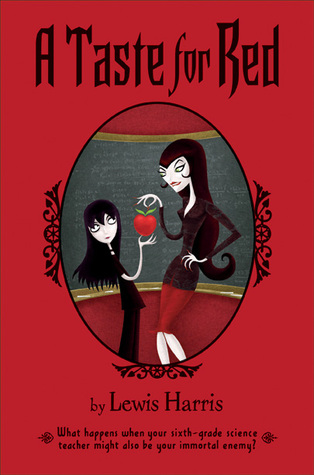
A Taste for Red by Lewis Harris

A Taste for RedStephanie, aka “Svetlana,” is a goth-clad sixth grader who eats exclusively red foods, sleeps under her bed, and discovers that she can control people with her mind.  She’s also convinced that she’s a vampire.  Stephanie / Svetlana has a new teacher, Mrs. Larch, and she thinks they might have something in common!  For instance, Mrs. Larch has a suspiciously dark wardrobe…  But is Mrs. Larch really on her side?  Reader beware:  this book has one really dark scene with a dead body; its probably best for 3rd-7th graders.

Continue reading