Bunnies with Moustaches, and Nine Other Things I Love About the Library

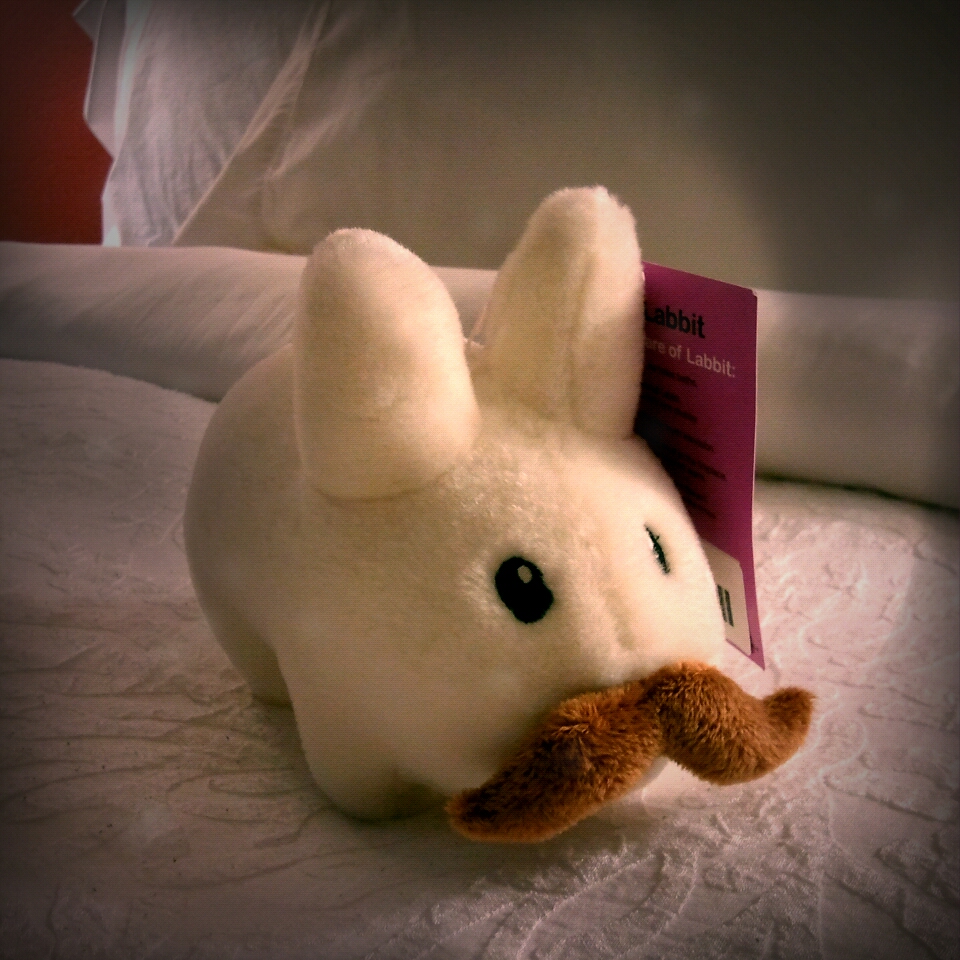
Plush bunny with moustache

There have been too many things to love about the library this spring.  At least five of them have to do with beer:

1. Reading Terminal Market and the Fabric Workshop and Museum

In March I headed to my first ever PLA conference, in adorable Philadelphia.  I roomed with my boss, and we watched “Friends” reruns in our hotel room.  So, it was pretty rad.  These Amish women at the Reading Terminal Market made the best sticky buns I’ve ever had in my life. Beer was consumed. But my favorite was the Fabric Workshop and Museum, where I met the very awesome Chicago librarians Vicki Rakowski and Ben Haines, and scored some pink plastic tentacles and a bunny with a moustache.  Then we saw Betty White.

2. The San Jose Public Library

Nate Hill, web librarian at San Jose Public Library, is my new favorite librarian — I saw him speak at PLA in Philly.  Imagine: self-published books by library patrons that could be instantly cataloged and then vetted by upvoting, like on Reddit.  And check out that sexy color coding on their website.  These are some of the brain children of Nate Hill, who makes jokes about dogs and burritos.

3. Erotic Fiction workshops

Also a Philly highlight: talking about smutty books with about 100 fellow librarians at 8:30 on a Saturday morning.  I learned that many erotic novels have purple or red covers, and I placed a hold on Fifty Shades of Grey.
Continue reading

Librarians Taking Charge

This month, I’ve had the opportunity to reflect on what I’d like to say to a room full of aspiring librarians.  B Sides Co-Founder Angela Murillo and I were invited to give a keynote at the Unpacking the “Library” conference at the University of Iowa on March 25th, which is literally just a few days away.

Deweyfree PolaroidWe immediately knew we wanted to talk about the importance of innovation and creativity in our field.  These were the driving forces behind the birth of B Sides, and ideas we’re both very passionate about.  As we started collecting our thoughts, we realized we wanted to dig up the “creation stories” of some of our favorite library innovators — from Melvil Dewey to the Maricopa County Deweyless Library; from Charles Folsom’s hole-punched card catalog to Oakville Ontario’s BiblioCommons Social OPAC — and share those inspiring stories with our peers.

But it wasn’t until yesterday that I finally recognized what’s at the core of what I want to share on Friday, which is the advice to: Take ownership — realize that no one else is going to fix this for you or give you a break.  You are your institution’s best advocate.

I think my profession tends to defer to those whom we view as “authorities” — database vendors, product distributors, city council members — and trust them to act benignly in our best interests, making things better for us.  But that’s not how it really works, usually, and we don’t have to buy into that fiction.  We can make our own decisions and advocate for ourselves.  I remember feeling so professionally empowered and liberated when Angela and I realized that we could take ownership of our ideas and choose to make things really happen for ourselves last year, and that epiphany has become a driving force in my career.

I’m looking forward to sharing the rest with you on Friday.  Stay tuned for our presentation notes and slides!

The Intellectual Freedom Festival Is Here!

Intellectual Freedom Festival

I’m so excited I can hardly stand it – the Intellectual Freedom Festival kicks off this Friday at the Iowa City Public Library!  The Fest is co-sponsored by the University of Iowa Library and Information Science Student Organization (LISSO), and the U of I Obermann Center for Advanced Studies.

What is Intellectual Freedom?

Intellectual Freedom is a basic human right, defined by Article 19 of the Universal Declaration of Human Rights adopted by the United Nations General Assembly in 1948. The American Library Association affirms Intellectual Freedom as a basis for our democratic system and recognizes the important role libraries play in Intellectual Freedom issues. To be responsible citizens who have the ability to self-govern, we must be well-informed. Libraries provide information, ideas and resources in a variety of formats, enabling an informed citizenry.

Continue reading